
the Indian Space Research Organisation (ISRO) initiated its first orbital mission of the year with the launch of the Polar Satellite Launch Vehicle – PSLV-C62 from the Satish Dhawan Space Centre in Sriharikota. The — India’s trusted workhorse rocket — lifted off at 10:18 AM IST, carrying 16 satellites including a primary Earth observation payload and numerous commercial and experimental satellites from both Indian and international customers. (The Economic Times)
The mission was part of a commercial launch contract by NewSpace India Limited (NSIL) and represented the 64th flight of the PSLV, a vehicle that has been central to India’s space achievements for decades — from Chandrayaan-1 to Mars Orbiter Mission and Aditya-L1. (ISRO)
Table of Contents
🛰️ Payloads Aboard: Eyes on Earth and Beyond
Here’s what PSLV-C62 was carrying:
- EOS-N1 (Anvesha): A next-generation Earth observation satellite developed by DRDO, equipped with hyperspectral imaging for environmental monitoring, agriculture planning, border surveillance and strategic applications. (The Economic Times)
- 15 Co-Passenger Satellites: Including commercial payloads from Indian startups and international partners, spanning communications, Earth imaging and technology demonstrations. (The Economic Times)
- KID Re-Entry Demonstrator: A 25 kg technology demonstrator by a Spanish startup designed to safely re-enter Earth’s atmosphere after deployment. (ISRO)
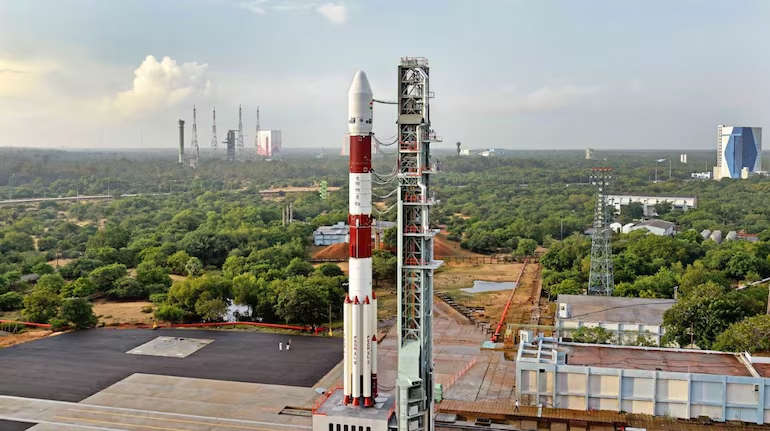
This mission also highlighted India’s growing private space ecosystem, with multiple small satellites from domestic companies onboard. (www.ndtv.com)
⚠️ What Happened? An Anomaly Mid-Flight
At first, everything proceeded normally: thrust, stage separations and telemetry all looked nominal through the early phases of flight. But around the third stage of the PSLV (PS3) — a critical solid-rocket section — the vehicle experienced a flight path deviation and anomaly that led it away from the planned trajectory. (The Times of India)
This unforeseen issue prevented the rocket from successfully injecting the satellites into their Sun-Synchronous Orbit, which means the mission did not achieve its objective. All payloads aboard — including high-value satellites — were lost. (www.ndtv.com)
ISRO has initiated a detailed analysis and set up a failure-review process to determine the exact cause of the anomaly, especially since it occurred at a similar mission phase to another recent PSLV setback (PSLV-C61 in 2025). (The Times of India)
🔍 Impact and Reactions
The space community and the nation reacted with concern and introspection.
- This incident marks two consecutive PSLV flight anomalies, raising questions about third-stage performance and reliability despite PSLV’s historically strong track record. (Reuters)
- The loss includes both Indian strategic and international commercial satellites, impacting private space companies and global partners. (www.ndtv.com)
- ISRO leadership has emphasized that this setback will not derail India’s overall space ambitions, and that lessons from detailed analysis will be applied to future missions. (The Times of India)
🌌 Why PSLV Still Matters
Even with this disappointment, the PSLV remains a cornerstone of India’s space efforts. Its flexibility and versatility — from launching Earth observation and commercial satellites to supporting international payloads — have made it one of the world’s most successful launch vehicles. (The Indian Express)
PSLV also enables critical experimentation — from re-entry demonstrators to new small-satellite technologies — helping India compete in a rapidly evolving global space economy. (ISRO)
🔭 What’s Next?
ISRO will focus on:
- Completing the failure analysis of PSLV-C62 to avoid recurrence.
- Rescheduling or reassigning missions originally planned for PSLV-C62.
- Continuing its ambitious launch calendar including missions for navigation (NavIC), Gaganyaan crewed flights and international commercial contracts.
India’s space journey is marked by bold strides and inevitable challenges — and every anomaly deepens our understanding and strengthens future missions.
If you’d like, I can dive deeper into technical aspects of the PSLV rocket, explain how Earth observation satellites like EOS-N1 work, or share a timeline of India’s space launch history!
Leave a Reply