The birth of Dr. Zakir Husain on 8 February 1897 marked the arrival of one of India’s most profound thinkers, educationists, and statesmen. Remembered not only as the third President of India, Dr. Zakir Husain’s greatest legacy lies in his lifelong dedication to education, national integration, and moral leadership. His ideas continue to influence India’s educational philosophy even decades after his passing.
Table of Contents
Early Life and Educational Foundation
Dr. Zakir Husain was born in Hyderabad, then part of British India, into a family that valued learning and cultural refinement. His father, Fida Husain Khan, was a respected lawyer, and this environment played a crucial role in shaping young Zakir’s intellectual curiosity. After his early education in India, he traveled to Germany, where he pursued higher studies and earned a doctorate in economics.
His exposure to European education systems helped him understand the strengths and weaknesses of Western pedagogy. However, instead of blindly adopting foreign models, Dr. Zakir Husain envisioned an education system deeply rooted in Indian values, culture, and social realities.
Contribution to Indian Education
Dr. Zakir Husain believed that education was not merely about literacy or employment but about character building, social responsibility, and national development. He strongly opposed rote learning and advocated for an education system that encouraged creativity, critical thinking, and ethical values.
One of his most notable contributions was his association with Jamia Millia Islamia, where he served as Vice-Chancellor. Under his leadership, Jamia emerged as a center for value-based education, emphasizing harmony between intellectual growth and moral development. He supported the idea that education should be accessible to all, irrespective of economic or social background.
Dr. Zakir Husain also played a key role in promoting basic education (Nai Talim), inspired by Mahatma Gandhi. This approach focused on learning through productive work, making education practical, self-reliant, and socially relevant. His vision aligned education with life skills, ensuring students were prepared not just academically but also emotionally and socially.
Role as an Educationist and Administrator
Beyond academic institutions, Dr. Zakir Husain contributed significantly to shaping national education policies. He served as the Governor of Bihar, Vice President of India, and eventually as the President of India. Even while holding the highest constitutional office, he remained a teacher at heart.
As President, Dr. Zakir Husain was known for his humility, simplicity, and unwavering commitment to democratic values. He believed that leaders must serve as role models, and his conduct reflected integrity and intellectual depth. He was the first President of India to die while in office, underscoring his dedication to duty until his last breath.
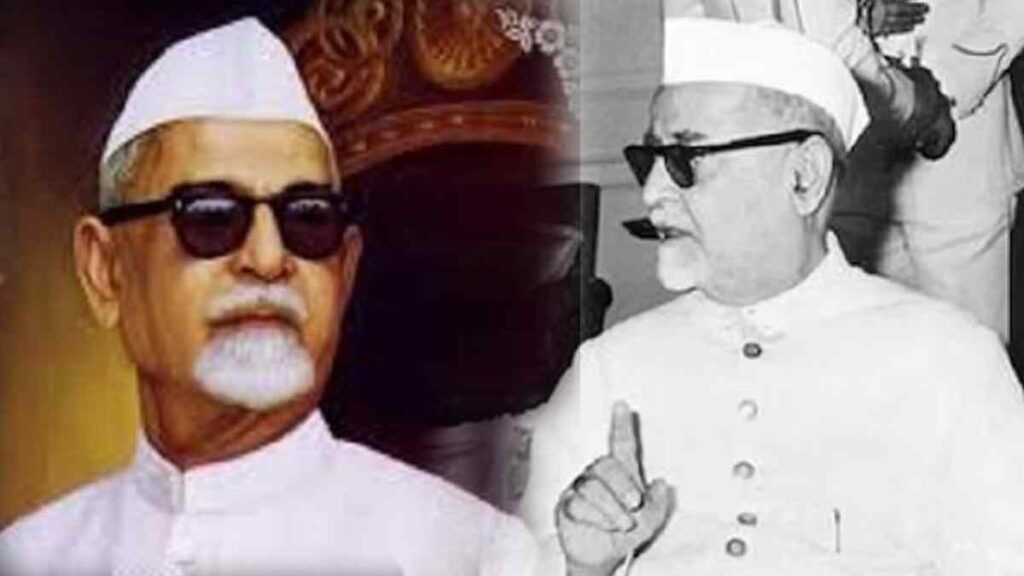
Literary and Intellectual Contributions
Dr. Zakir Husain was also a prolific writer and thinker. His works on education emphasized the integration of culture, ethics, and learning. He consistently argued that education must foster unity in diversity, a principle central to India’s identity.
His speeches and writings continue to inspire educators, policymakers, and students. They remind us that education is a powerful tool for social change and national progress when guided by moral vision.
Legacy and Relevance Today
More than a century after his birth, Dr. Zakir Husain’s ideas remain highly relevant. In an era dominated by technology and competition, his emphasis on human values, inclusive education, and holistic development offers a meaningful counterbalance. He believed education should nurture compassionate citizens, not just skilled workers.
Educational institutions across India continue to celebrate his birth anniversary, reflecting on his contributions and renewing commitments to ethical and inclusive learning. His life stands as a reminder that true education empowers individuals while strengthening society.
Conclusion
The birth of Dr. Zakir Husain on 8 February is not just a historical milestone but a moment of enduring significance for Indian education. His vision went beyond classrooms and degrees, focusing instead on shaping responsible citizens with strong moral foundations. As India continues to reform and reimagine its education system, the principles championed by Dr. Zakir Husain remain a guiding light.
Remembering him is not only about honoring the past but also about reaffirming the purpose of education in building a just, enlightened, and united nation.

Leave a Reply